





Decoration
How to Refresh Your Home with Lighting
A home can be entirely reinvigorated with just the lighting. Click here to find out about a few tips and tricks to get it right.
How to Refresh Your Home with Lighting
There comes a time in every interior designer's life when they look at their space and think: I could do better. Ever the perfectionists that we are, it’s hard to design a space and then live in it. You’re bound to find discrepancies, or little details that may have seemed right at the time, but don’t have the same effect now.
It’s perfectly natural, no matter how good your household is. We promise, if you were to put Leonardo Da Vinci and some painting appliances in the same room as the Mona Lisa for several years, he would leave the room with a completely different picture.
But your next redesign doesn’t have to be such an effort. We’ve found that just a few lighting changes can be enough to refresh a house and reinvigorate it for another few years.
It could be that you have too much light in certain areas, causing them to become oversaturated. Or it could be that your light is too minimal, relying on natural light that doesn’t quite allow your rooms to pop. Whatever it is, there are several ways to take control of the situation.
Decorative Lamps For Focus
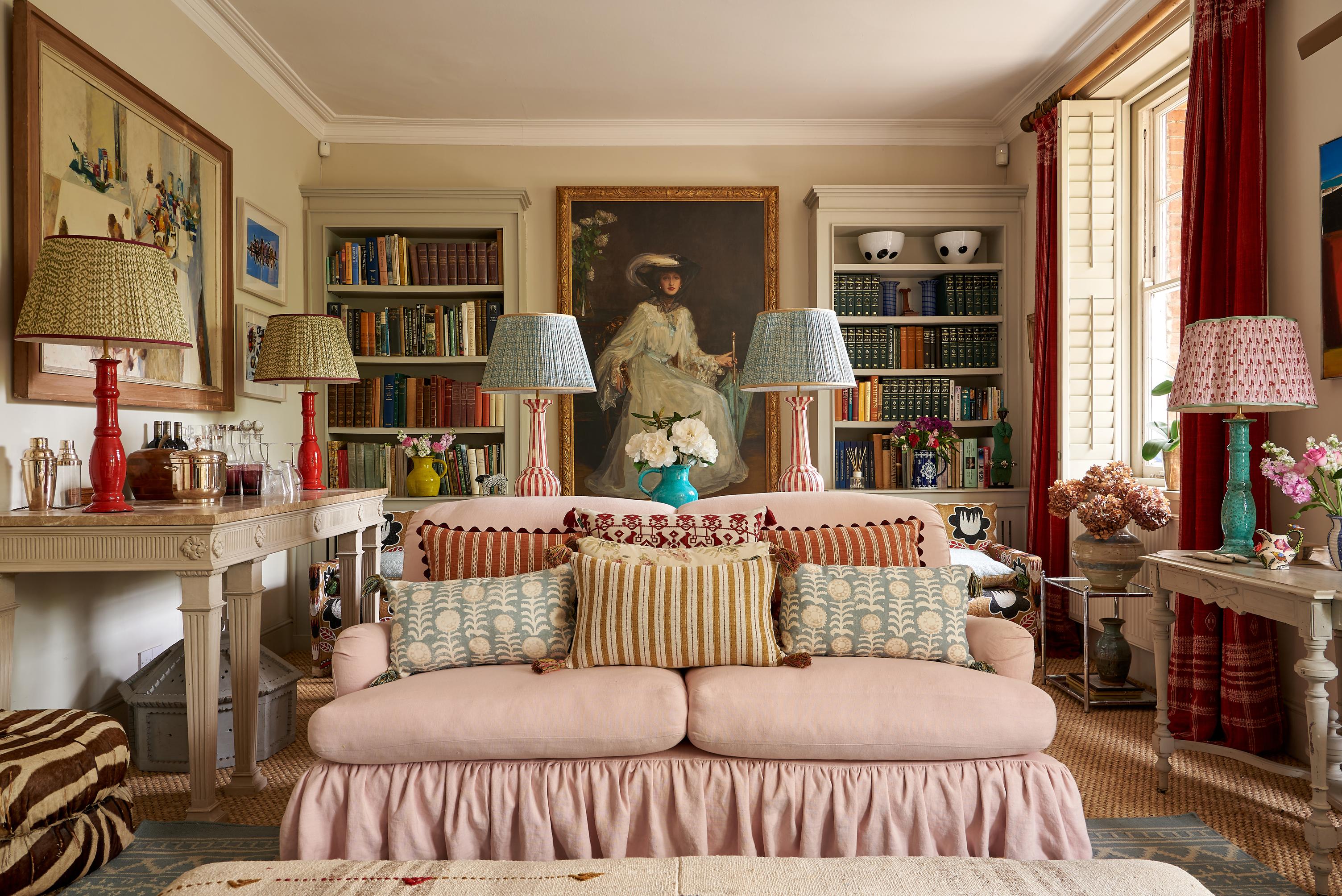
If all your wiring has already been done – and you’d rather not call in the electrician for a second time – then lamps are always going to be your best option. Lamps can offer decorative lighting with more focused, adaptable placement, and they also offer a sense of luxury that ordinary lighting solutions do not.
They are ornamental as much as they are practical, adding to the furniture of the room rather than being purely pragmatic. This is important when considering the rejuvenation of your home.
Because you can concentrate your light source, you can stimulate areas of the household that have been subdued, making your rooms feel bigger and warmer as a result. Granted, a significant part of this depends on the bulbs that you choose.
Bulbs and Textures
Because various lighting solutions – including LED and halogen bulbs – have made it hard to measure wattage, it’s important to focus on both lumens and kelvin. Lumens is the amount of output that you will get from a bulb, while kelvin is the colour temperature. A lower grade of lumens will give you a soft, decorative light, while a standard 2700K will offer a warm white temperature – more blue-white hues over yellow candlelight hues.
Which way you decide to go will depend primarily on the space itself. You always want to use light to complement your interior design. If the majority of your rooms have darker textures and fabrics, you’ll need a higher colour temperature to avoid light absorption.
Once again, lamps are a good way to concentrate this, avoiding stark and imposing overheads with strategically placed lamps that can ignite those dark textures. If you would like new focal points, you can also utilise your lighting to amplify them – again, the type of bulb will depend on the focal point you’re looking to highlight, as well as the textures that surround it.
Creating Layers
It might sound a little simple, but refreshing a home doesn’t have to be anything but simple. Simply diverting people’s eyes to a new space can be enough to give a room a new feel.
Furthermore, multiple sources of light can create both drama and depth. This includes a base level, a tone-setter, and an accent for focus. If you start with ambient lighting to establish your base layer, lamplight and pendant light can set the tone for the room, while your accent lights can build on top of this by highlighting interesting features or decorative items.
What you’re doing here is creating layers that work to refresh a room that had previously been one note, and this can be a perfect way to reimagine the living room or kitchen. During an interior design project, these are perhaps the most challenging spaces.
They’re gathering spots, so they tend to need more light than other rooms, but they’re also supposed to be relaxed and atmospheric, which suggests warmer, softer tones. By layering your lights, you can capture every element of the room, while also creating an inviting space that radiates a sense of opulence, simplicity, modernity, or whatever it is you want that space to be!
A Fresh Refresh
There are plenty of other ways to reconfigure your lighting, but what we’ve discussed can be enough to refresh your home and keep you content for another few years. At least, until the designer in you has other ideas and you want to have a fresh refresh all over again!
More from Decoration