



Decoration
Greek Design: Exploring Centuries of Influence
Click here to find out more about adding a touch of the Grecian into your home.
Greek Design: Exploring Centuries of Influence
Transport yourself to the shores of Corfu or Crete. From the meander to the Corinthian order – the lemon grove to the olive tree, naturally gnarled under the high Mediterranean sun – the instantly recognisable silhouette of the amphora to the beautifully dilapidated sculptures half buried beneath trailing vines, Greek design is one of the world’s most familiar – and seductive.
Over the millennia, Greek influences popped up on shores around the globe. Along with their exports of olive oil and wine, the ancients sent out fine pottery and stories – elements of their culture that inspired thousands who would never see it for themselves.
Even today, those elements are enough to transport us. The slow rhythm of the more secluded islands proves a constant muse to creatives. The esteemed photographer Miguel-Flores-Vianna keeps a home on the island of Rhodes – one where the archetypal elements of timeless Greek architecture and interior design are interwoven with the lives lead within the home’s rooms and courtyards.
True, homes that embody the Greek spirit so literally generally need to stay locked within those shores. While a sun-drenched terrace during a British summer may be convincing enough, that ambience will inevitably melt away in the rain, sleet, and snow.
But we can – and do – integrate plenty of Greek influences in our homes in less literal ways. From lighting to print, here are our favourite ideas.
Complex Geometry
The meander is one of the most recognisable symbols of Greece – an unbroken line, forming a long, repeating border or a series of interlocking abstract shapes on the walls or floor.
Again, the trick here is to avoid too literal an interpretation of the meander. Just as a white and blue colour palette could easily feel gimmicky, so too could overuse of this ancient motif.
Draw inspiration from the Greeks’ love of mosaic, and look for more complex geometric patterns that bring texture and colour to the room. Our Vasari Fabric is a great example of this. Spread your prints across the furnishings, the floor (a geometric rug is a great way to evoke the tiled floors of Greek villas), and the walls, with plenty of block colours to maintain balance.
Linen
This fabric, woven from the fibres of the flax plant, has ancient roots in Greek culture. More so than wool and silk, linen was the fabric of choice for Ancient Greeks looking to protect their skin from the harsh sun without overheating.
After all, linen’s breathability and ability to absorb moisture from the skin make it one of the most comfortable fabrics to wear in extreme temperatures. The flax plant is hardy and fast-growing, particularly in bright sunlight and dry, sandy soils.
Producing linen was a slow and painstaking process. Even now, linen cannot be produced at scale; it needs to be woven in small batches, and still requires time and skill from those who make it. It has a distinctive drape – an unfussy crease that appeals to a more relaxed way of living.
While Ancient Greek design is often associated with the stark whites of surviving statues, historians believe colour played a key role in clothing and decoration.
Don’t shy away from pattern. Although production constraints would have limited the Ancient Greeks, geometric motifs are highly evocative of Greek design. Alternatively, a linen bearing an organic print, like our , draped sumptuously over a window or doorway, will evoke that same style.
Colour
The distinctive blue and white of Santorini doesn’t need to represent the sum total of your exploration of Greek colour palettes. For something a little less literal, incorporate the colours of the landscape – olive green, clay and umber, crystalline blue or sun-dried yellow – into your décor, too.
Contrast white walls with golden lighting from sources dotted around the room, rather than beaming down from overhead. Block out the direct sunlight with a thin, linen curtain – one that diffuses those dazzling beams into something softer and less oppressive at the hottest part of the day.
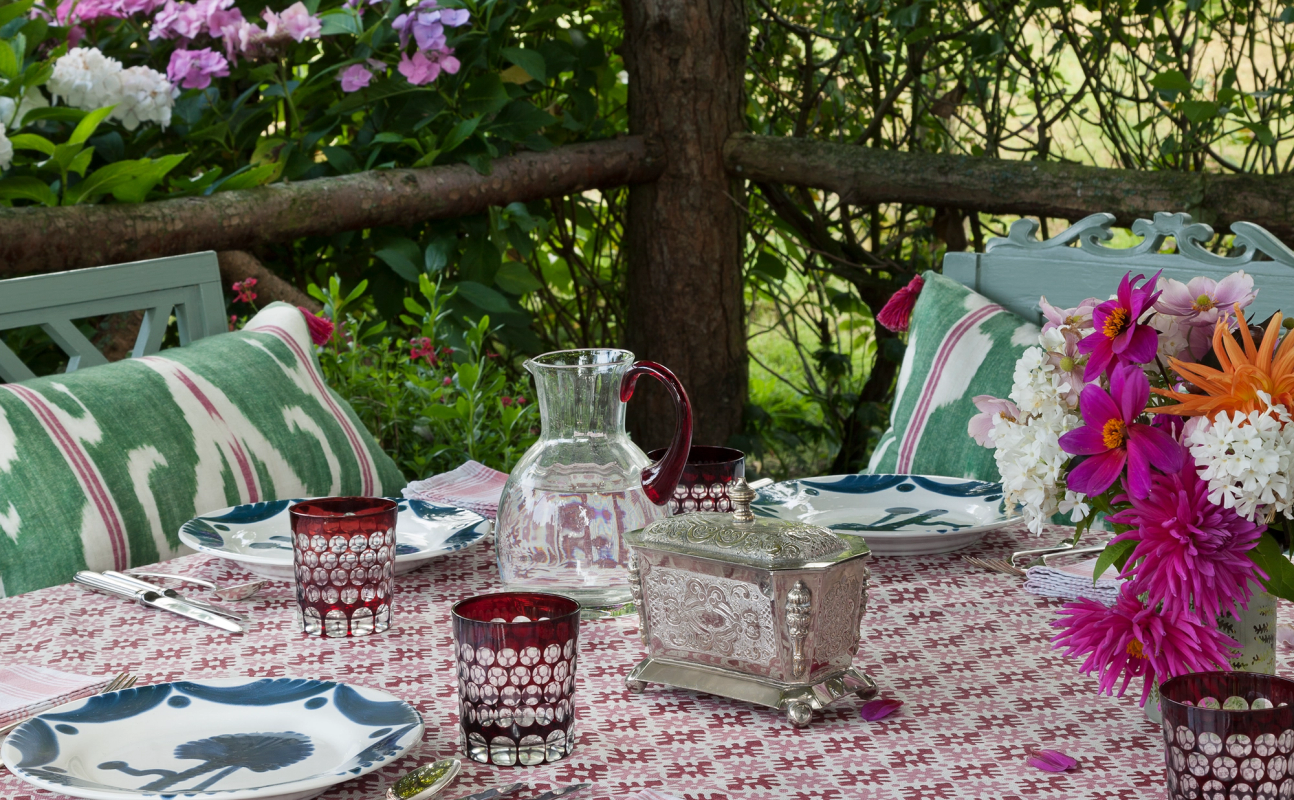
Don’t feel limited. The Greeks habitually coloured their sculptures with paints made from vivid pigments taken from the natural world: ochre, cinnabar, azurite, madder, and carbon. Splashes of brighter colour should be welcomed, particularly in the dining room, where the centrality that food holds for Greek life can be explored passionately.
Ever since the first ancient trade routes opened up, people have been finding ways to explore different worlds of design and architecture based on stories – and, later, their own experiences there. Greek design is among the most beautiful out there, and it’s the perfect muse for the creative home, even if you’re thousands of miles from its shores.
More from Decoration